




When I Think About My Own Childhood, I Don’t Remember Toys
As parents, we spend so much time wondering whether our children are ready for kindergarten. We practice holding a pencil, counting to ten and recognizing letters, hoping we’re giving them the best possible start. Looking back now, as a mom of two boys who are almost grown up, I realize that the things I worried about the most turned out to matter the least.
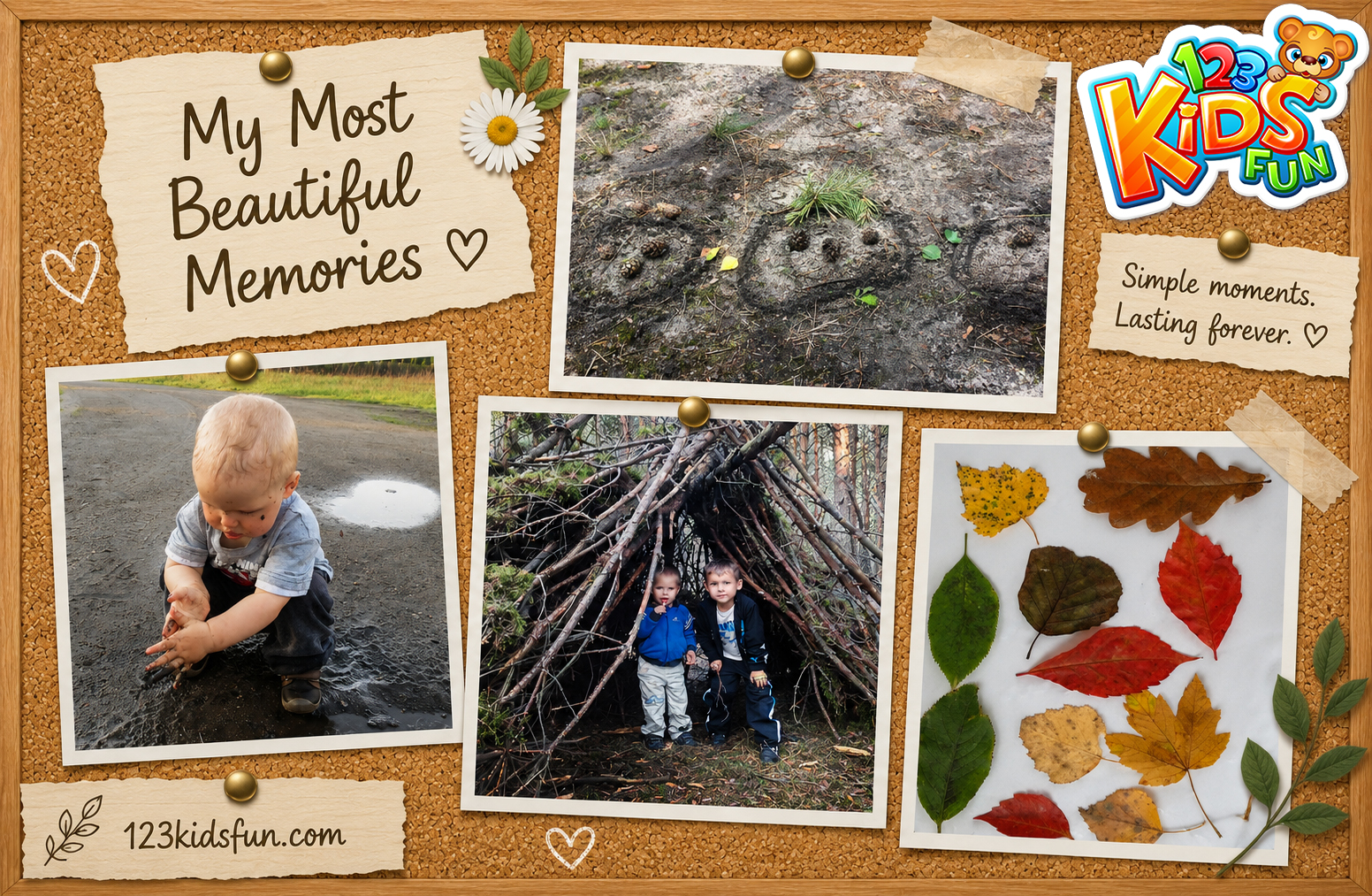
When I think about my own childhood, I don’t remember worksheets or school readiness activities. I remember running barefoot across the grass on warm summer evenings. I remember making flower crowns with my friends, carrying home little bouquets that probably looked beautiful only to us, and spending entire afternoons building tiny forts in the woods from branches, leaves and anything else we could find.
I remember lying on the ground and watching clouds drift across the sky, convinced that one looked like a rabbit while another looked exactly like a pirate ship. Nobody was teaching us mindfulness. Nobody was talking about sensory play or cognitive development. We were simply children, and the world around us was enough.
Years later, without even thinking about it, I found myself sharing many of those same experiences with my own sons.
The Memories My Sons Still Talk About
Today my boys are teenagers. Like every parent, I sometimes wonder whether I did enough. Whether I chose the right toys, planned enough educational activities or found enough opportunities to help them learn.
But whenever we talk about their childhood, something surprising happens. They never mention the expensive things. Instead, they laugh about the night they decided to sleep outside on the trampoline. They carried blankets and pillows into the garden, convinced they were going on the greatest adventure of their lives. We watched the stars, listened to crickets and stayed awake talking until everyone slowly fell asleep.
They remember splashing through puddles after summer storms until they were completely soaked. They remember planting tiny seeds and checking every morning to see if anything had started growing. They remember building insect hotels together and returning days later, full of excitement, to see whether any little guests had moved in. Those moments were wonderfully ordinary. They cost almost nothing. Yet somehow they became unforgettable.
Childhood Doesn’t Need More Toys. It Needs More Wonder
I sometimes think today’s parents carry an enormous weight on their shoulders. Everywhere we look, someone is telling us that we should be doing more. More educational toys. More organized activities. More classes. More enrichment. More preparation for school. And yet, children don’t measure childhood the way adults do. They don’t remember how much money we spent. They remember how we made them feel. They remember whether we stopped to watch a butterfly instead of rushing home. They remember whether we jumped into the puddle with them instead of telling them to stay clean. They remember whether we were curious together. Curiosity is one of the greatest gifts we can give a child, because curious children don’t stop learning when the activity ends. They keep asking questions long after everyone else has gone home.
Every Small Adventure Becomes a Conversation
Some of my favorite family memories started with something incredibly simple. A walk through the woods often turned into an afternoon spent collecting pinecones, sticks and unusual stones. Sometimes we built tiny houses for imaginary forest creatures. Other times we arranged leaves, pebbles and branches into beautiful pictures on the forest floor, leaving them behind for the next family to discover. Those quiet moments always seemed to lead to wonderful conversations. “Who do you think might live in this little house?”, “Why do you think pinecones open when they’re dry?”, “If you were a tiny beetle, where would you hide?”
Children don’t need perfect answers. More often than not, they simply need someone willing to wonder with them.
Nature Is the Best Classroom
Some of the most meaningful lessons happen without children even realizing they are learning. Planting a sunflower teaches patience because children quickly discover that some things simply cannot be rushed. Building an insect hotel opens the door to conversations about bees, butterflies and why even the smallest creatures matter. Painting colorful rocks and hiding them for strangers to find becomes a lesson in kindness, generosity and the joy of making someone smile without expecting anything in return. Watching different objects float or sink in a bowl of water introduces the first ideas about science and physics, yet to a child it still feels like a game.
Every activity becomes richer when we pause to ask a question.
“What do you think will happen?”
“Why do you think that happened?”
“What should we try next?”
Those simple questions teach children something far more valuable than memorizing facts. They teach them how to think.
The Best Conversations Happen When Nobody Is in a Hurry
Some of the sweetest memories aren’t connected to any activity at all. They happen while lying on the grass and watching clouds change shape. While listening to birds early in the morning. While trying to guess which insects are making sounds after sunset. While flying a homemade kite and wondering why the wind can lift it into the sky even though we can’t see the wind itself. Children naturally ask extraordinary questions when we give them enough quiet to notice the world around them. Those conversations cannot be scheduled. They simply appear when we slow down.
Before Kindergarten, Let Them Be Little
There will be plenty of time for spelling tests, handwriting practice and multiplication tables. Childhood, however, is much shorter than we realize. Before children learn to sit still for hours in a classroom, I hope they have the chance to get muddy, collect interesting rocks, build forts, watch ants carrying tiny treasures and lie beneath the clouds imagining impossible stories. Because one day they probably won’t remember every worksheet they completed. But they may remember the smell of the forest after summer rain. The sound of crickets on a warm evening. The flower crown that kept falling apart and made everyone laugh. The tiny insect hotel they proudly built with someone who loved them enough to spend an afternoon doing absolutely nothing important. Or perhaps, looking back many years from now, they’ll realize that those ordinary afternoons were quietly teaching them the most important lesson of all.
That the world is a wonderful place, especially when there is someone beside you to explore it together.
About the Author
I’m a mom of two boys who are now almost adults. This article isn’t based on a parenting trend or a research paper. It’s based on the childhood I was lucky enough to have and the one I tried to create for my own children. As the founder of 123 Kids Fun, I believe the greatest gift we can give children isn’t a perfect childhood, but a curious one.